Whale Watching in the San Juan Islands
August 19, 2026

Although I grew up in the San Juan Islands, I never went whale watching or saw an orca there. In fact, until this July as we were approaching Heimaey, Iceland I had never seen an orca in the wild.
My best friend from high school, Ranatta, had never been whale watching and it was on her bucket list, so we got together finally went! We booked with Island Adventures and had an amazing experience. The boat was the best I had been on for whale watching. (I had been on previous whale watching trips, just not in the San Juans). It had plenty of indoor and outdoor seating and room along the rails. The bow had tiered seating so everyone had great views.
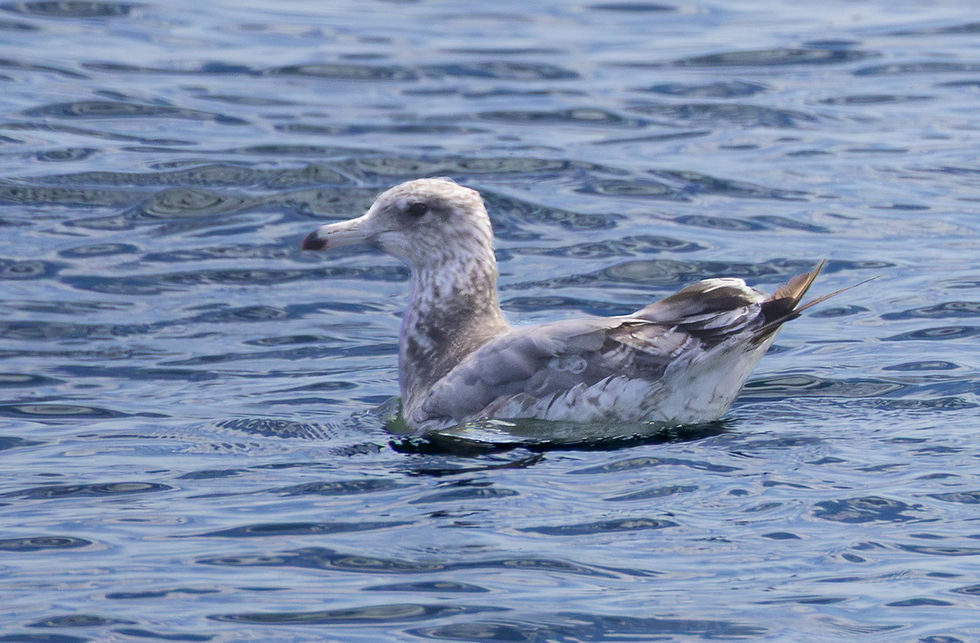
We left the dock and spotted a young gull, possibly a Glaucous-Winged Gull.

Soon we passed by a buoy with a resting Steller's Sea Lion and a pair of cormorants.


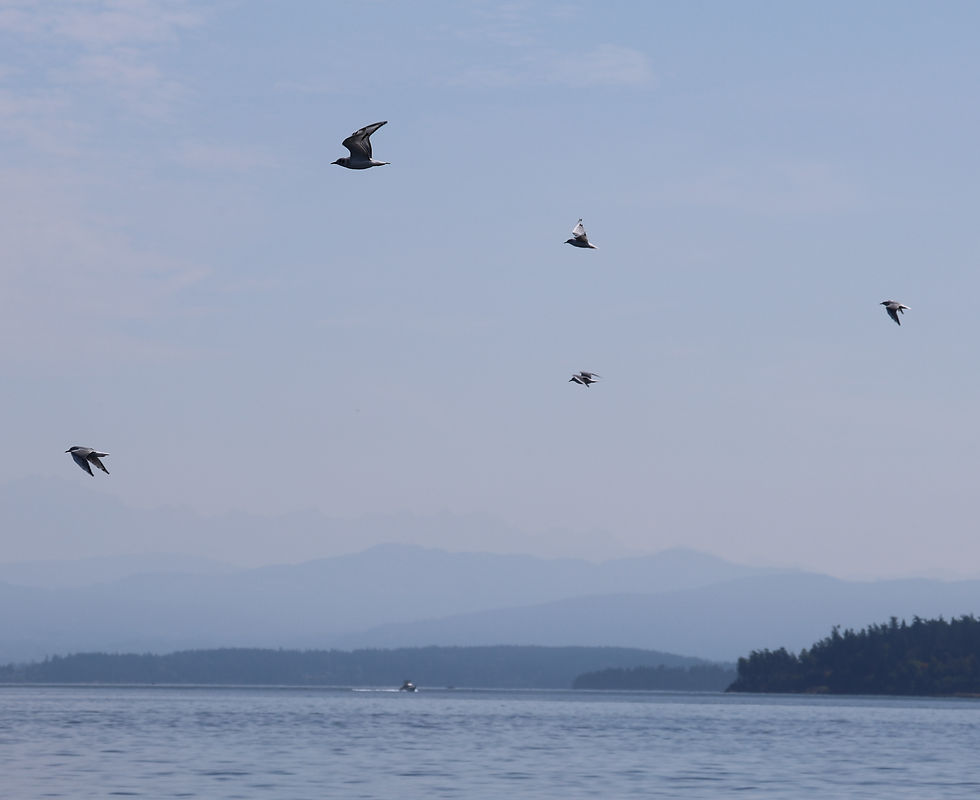
We then started searching for whales. Other boats were also out searching and each had a different part of the "grid" that they were responsible for. There was no luck at first, but we enjoyed the scenery as gulls flew by and we sailed past different islands.

Then they announced that orcas had been spotted. We headed close to Canadian waters. and in about 20 minutes they were in sight.
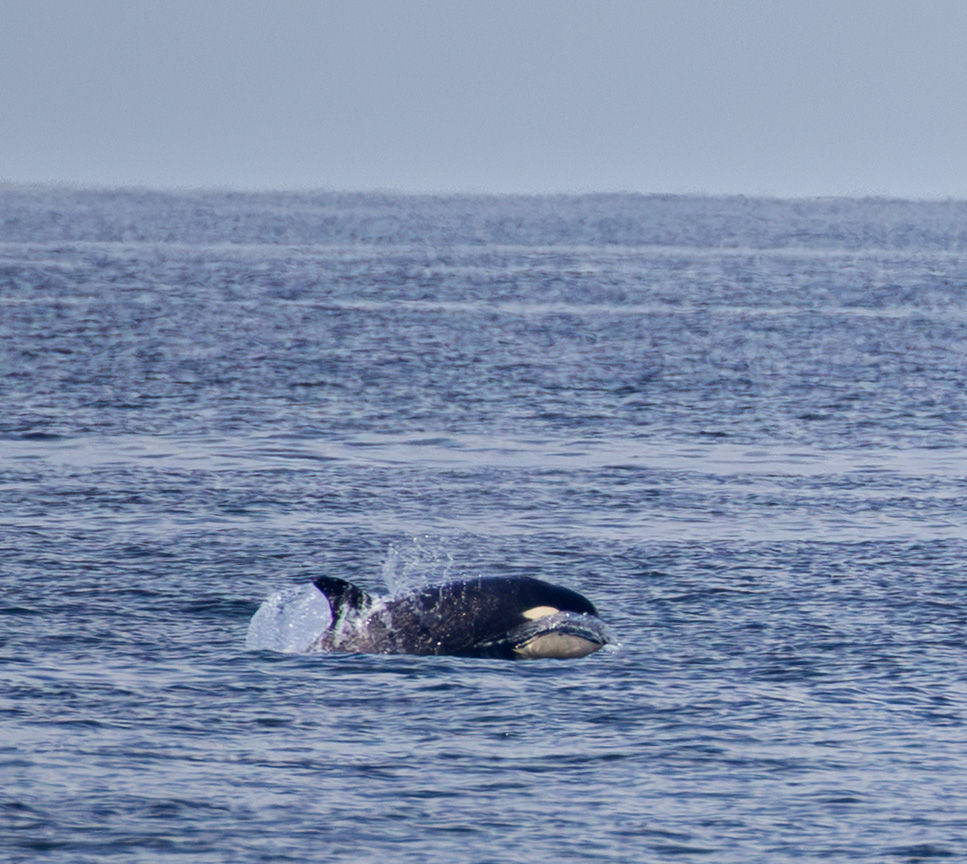
We were extremely lucky as there were different family groups in the area and they were very active. You can get details about the specific families and whales we saw at https://blog.island-adventures.com/. (It hasn't been posted quite yet - we went out at 10:00 a.m. on August 19.)

Ranatta took this great video which captured a breaching whale!
The little dorsal fin is the baby orca.

Each orca had unique markings which they were able to use to identify the whales by name.

The largest whale is the matriarch, the grandmother. This family group had 3 generations of whales which was unusual.

The largest porpoising orca clearly shows its saddle patch behind the dorsal fin. These saddle patches are like fingerprints on humans. They can be used to identify the orcas.

The newborn calf popping up from the water still has the orangish-coloring instead of the white patches. This is because it only has a thin layer of blubber instead of the 9 to 10 centimeters that adults orcas develop.

This whale is spyhopping - rising out of the water to see what's around on the surface. Likely it is checking out all the boats.


Seeing the whale breaching, at least partially, was the most exciting.


The tail slaps were fun to watch as well.


What's that pink thing peeking up? It's actually the tip of a whale penis - probably from an adult or sub-adult male in the T party pod that was socializing together.


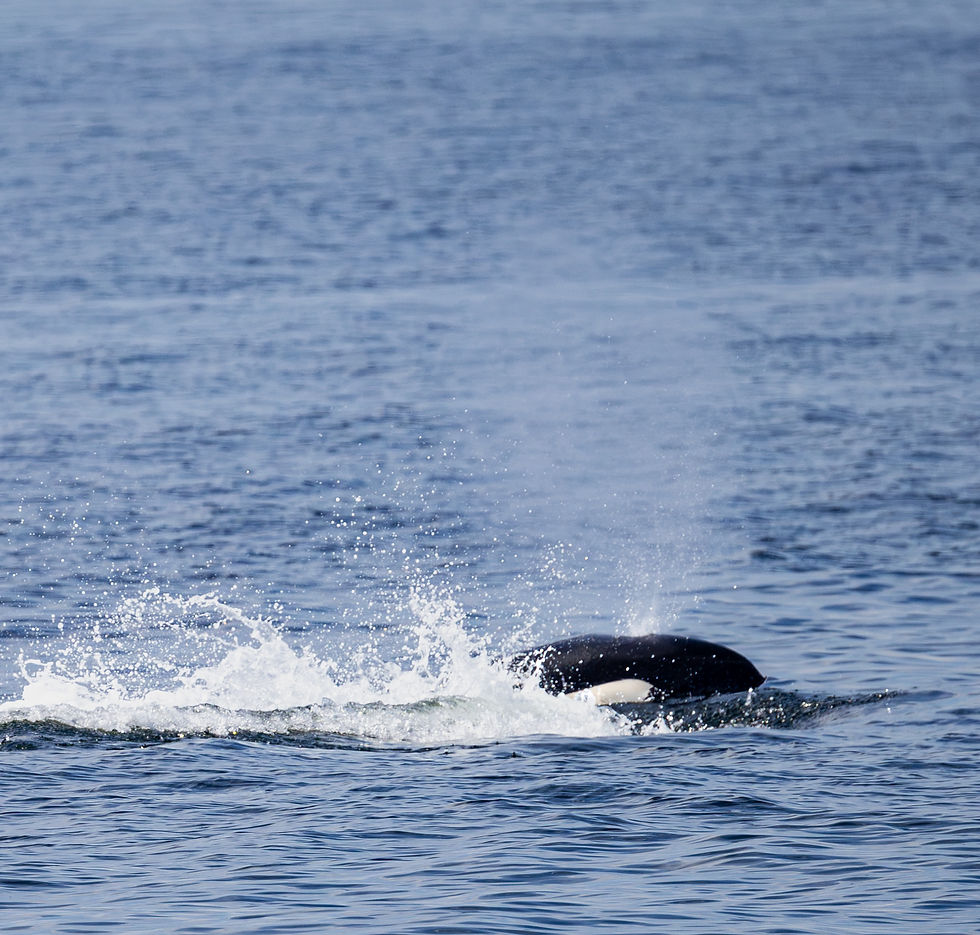


Another breach.


More tails.


All too soon it was time to go. Here are some parting shots with a final breach.


As we headed back, we had a good view of the Patos Island Lighthouse with Mt. Baker in the background.

We also saw some California gulls on the way back.

Comments