Connemara and Galway
June 30, 2026
We drove through the Connemara National Park on a day trip out of Galway to Kylemore Abbey.
As we drove out of Galway, we crossed over the 200-year old Salmon Weir Bridge, giving us a good view of the newly-buily Salmon Weir Pedestrian and Cycle Bridge.

We also passed by the Galway Cathedral with its distinctive copper dome.

About half an hour outside of Galway, we visited the historic Ross Railroad Station, now a private home restored by the Joyce family who made their fortune in Connemara Marble. In the restoration, they made sure to retain the hallmarks of the original station. The grassy area is where the trains would pull up to the station.

While there, we enjoyed a brief history of Connemara marble whose distinctive green hues grace the senate building in the capitol of Pennsylvania and the Carnegie Natural History Museum in Pittsburg.

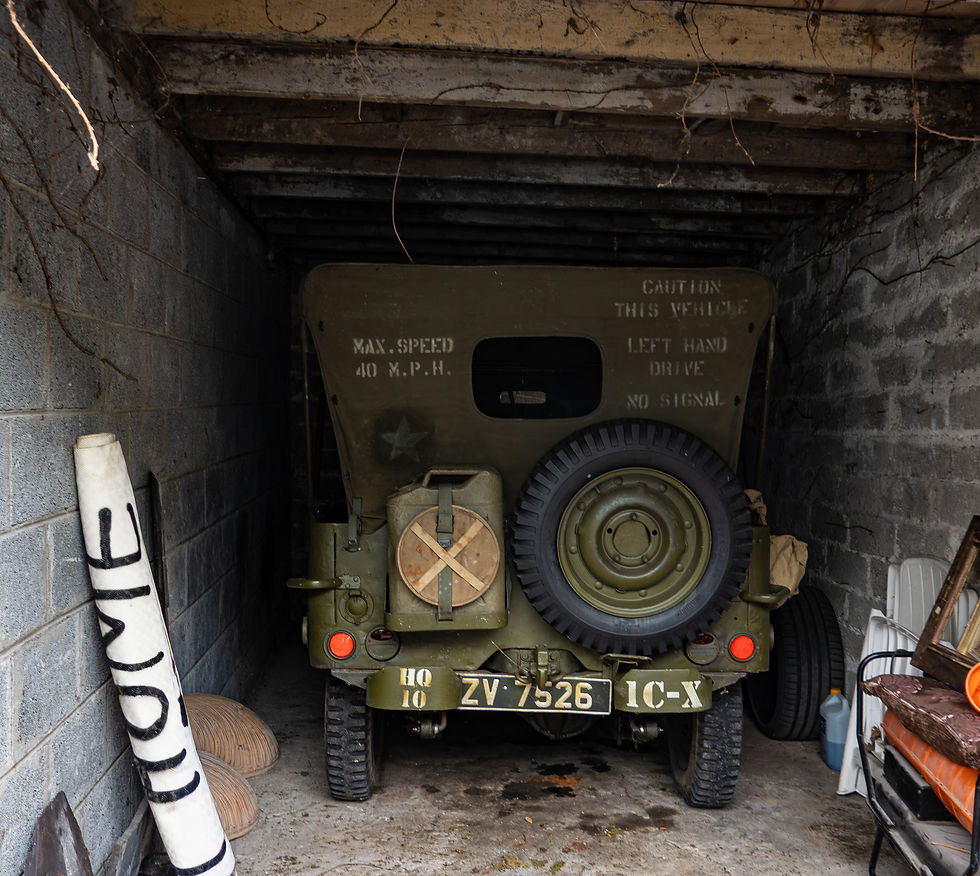
Mr. Joyce is an avid collector and his home displays many pieces of history both about the railroad station and many other eclectic areas, such as the old World War II jeep in shed.

After that interesting stop, we continued our drive through Connemara.


While driving through one of the routes in Connemara, we counted sheep. Not just any sheep, only the ones outside the pasture along the side of the road (or in the road) counted. I guessed 42 (fans of Douglas Adams will understand), but we saw well over 60. Here are a few of my favorites.
In the Irish countryside, you often see lone houses surrounded by green hills and valleys with stone fences lining the pastures.

The Connemara Pony is both hardy and gentle. Sturdy enough for adults to ride, but patient enough for children as well. They are strong and renowned for their skill at jumping.


We eventually reached Kylemore Abbey. Mitchell Henry build Kylemore Palace in the 1860s for his beloved bride, Margaret, after they fell in love with the area on their honeymoon. In 1920, the Irish Dames of Ypres, a group of Benedictine nuns, purchased Kylemore after their monastery in Ypres was destroyed in World War I. From 1923 to 2010 they used Kylemore as an international boarding school for girls. Although no longer a school, Kylemore Abbey is still a functioning monastery.

The nuns installed this Celtic high cross as a marker for prayer and spiritual hospitality. Although most high crosses are of stone, this is beautifully carved wood.

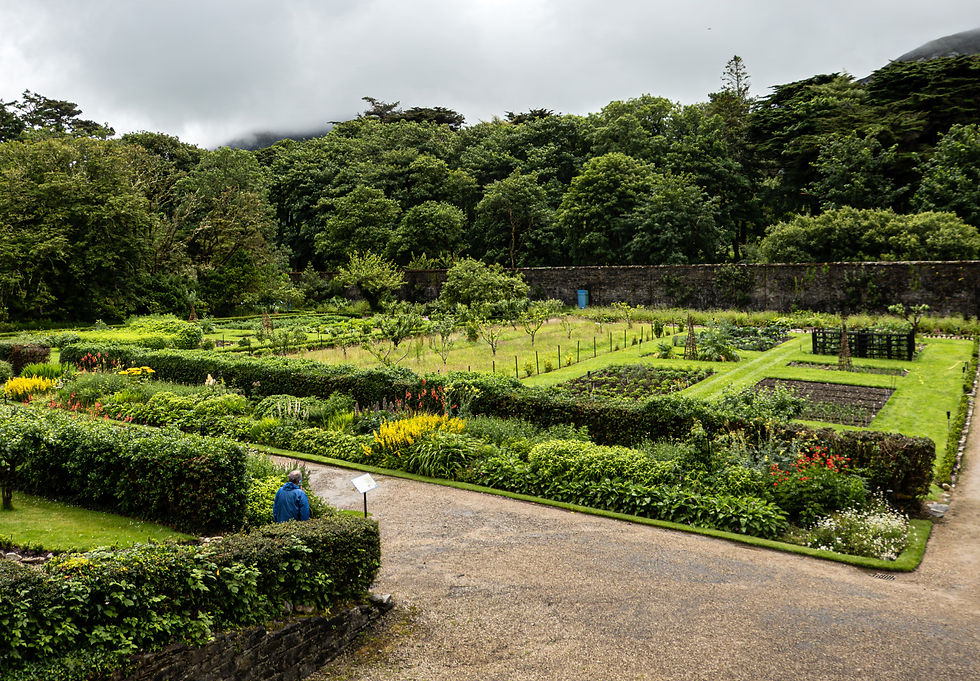
We spent our time at the monastery exploring its renowned walled Victorian gardens.
This intricate chainsaw sculpture of woodland animals by Tommy K stands outside the entrance to the gardens.

The walled gardens are built on hills so you can have lovely views of the gardens from the top.

We explored the Bothy, the 19th century living quarters of the under-gardeners which has recently been restored and converted to a small museum.


Then we explored the extensive gardens themselves.
All too soon, it was time to return to Galway.
Once it Galway, we had time on our own to walk around the town. The streets were crowded, but we enjoyed our walk.


Comments